Since our first encounters with the sea, we have known them: jellyfish. Sadly known for their searing slithers, these marine animals often end up being perceived solely and exclusively as a danger. Their fluttering transparency and long stinging tentacles inspire fear and distrust, but beyond the annoying pain they can cause, jellyfish are extraordinary creatures as old as the sea itself.


Present in the oceans for hundreds of millions of years, jellyfish play a crucial role in the balance of marine ecosystems. Yet their survival is often put at risk by irresponsible human behavior. Indeed, there are those who catch them and then leave them to roast in the sun, without regard for the suffering and ecological impact this causes.
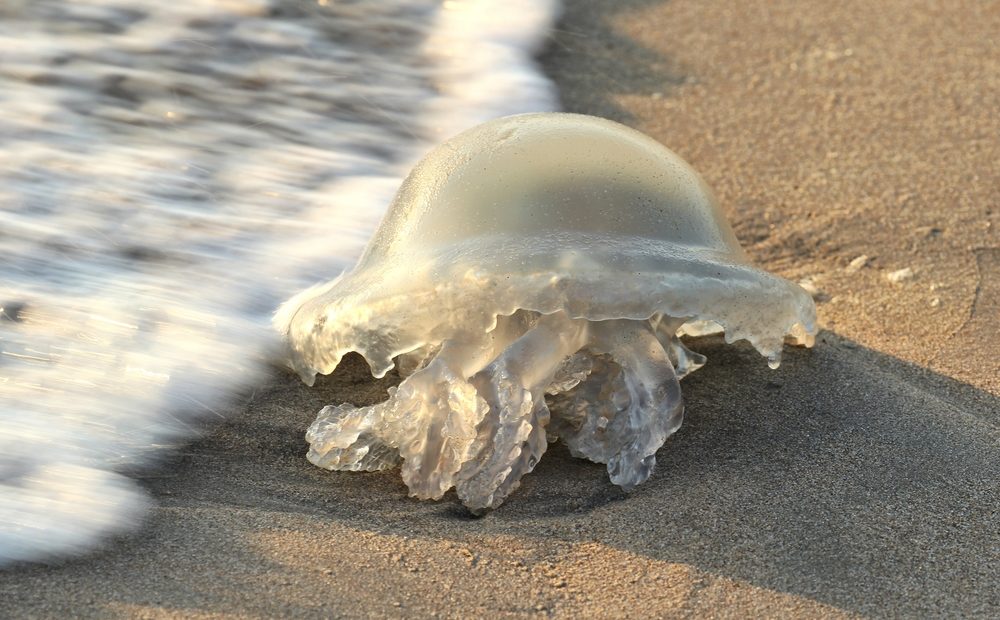
But it is not always humans who bring them to the beach. Jellyfish also often come ashore pushed by currents, only to find themselves motionless on the shoreline or floating in the shallow pools of water left by the tide.


Finding one or more beached jellyfish is therefore much more common than people think, but leaving them there to die is both an ethical mistake, because jellyfish are sentient beings and suffer, and an ecological one, because their disappearance can damage the marine balance.
So let’s see what the functions of these unloved marine animals are and what are the correct behaviors to take if you find suffering jellyfish on the beach.
1. Why jellyfish are important
Although they can cause pain, jellyfish are allies to the marine environment. Their role is critical for several reasons:
- They control zooplankton, on which they feed, contributing to the balance among species.
- They oxygenate water, aiding the circulation of nutrients and the oxygen cycle.
- They are food for many other species, including sea turtles, tuna and sunfish.
In essence, they are part of a complex ecological chain. Protecting them is an act of responsibility to the sea.
2. What to do if the jellyfish seems fine
If you see a live jellyfish, still intact and apparently in good condition, you can act with extreme caution yourself:
- Use a bucket or net to pick it up gently, avoiding any direct contact with its tentacles.
- Do not use your hands, even with gloves: even beached jellyfish can sting.
- Return her to water deep enough for her to swim freely.
Alternatively: notify the lifeguard immediately, who will intervene safely.
3. What to do if there are many jellyfish
In the presence of a jellyfish swarm, do-it-yourself is not enough. Professional intervention is needed:
- Do not touch them or try to move them yourself.
- Contact the Harbor Master’s Office by calling 1530: operators will assess the situation and decide how to act in a safe and respectful way for animals and bathers.
Small gestures that make a difference
You don’t have to be a marine biologist to care for the sea. Even a simple gesture like returning a jellyfish to the water is a concrete contribution to protecting biodiversity.
Remember: jellyfish are not a nuisance to be eliminated, but a natural presence to be respected.
© Riproduzione Riservata